You may be wondering how mindfulness is related to photography. I never thought the two were connected either, until I spent a year practicing meditation. Not only did my mental health improve, but magically, somehow so did my images! So in this article, you’ll learn how you can apply mindfulness to your photography.
TL/DR: Practicing mindfulness meditation improved the author’s photography more than any technical course. By learning to observe emotions and be present with what exists rather than forcing planned shots, you develop authentic storytelling ability. Feel and see first, then learn the technical skills needed to capture those observations.
Table of Contents
What is mindfulness?
First, let’s define mindfulness.
Three ways to understand mindfulness
The Cambridge dictionary says, “mindfulness is the practice of being aware of your body, mind, and feelings in the present moment, thought to create a feeling of calm.”
The American Psychological Association defines it as: “Awareness of one’s internal states and surroundings.”
A more practical definition is: mindfulness is the practice of purposefully bringing your attention to the present moment, being fully aware of where you are, what you are doing, and what’s going on around you. It’s about observing without judgment.
After a year of daily practice, here’s how I’d define mindfulness for photographers: it’s training yourself to notice three things simultaneously – what you’re seeing, what you’re feeling about what you’re seeing, and the gap between those two things. That gap is where creativity lives.
Before mindfulness, I’d walk through the woods wanting to find something worth photographing. Now I walk through observing what’s actually present – this light, this decay, this unexpected arrangement – and asking what emotion it creates in me.
The photos I take now come from that observation, not from my agenda.
Mindfulness didn’t teach me composition or exposure. It taught me to recognize the moment before composition matters – when you first notice something has a story to tell.
Note: The practice has been extensively studied and validated by medical researchers. The National Institutes of Health provides an overview of the scientific research on mindfulness meditation.
How 10 months without my camera made me a better photographer
I began practicing mindfulness seriously in 2023. During that period, I had few opportunities or the energy to do much photography. I was battling a few things in my life, and I barely used my camera for 9 or 10 months.
During that year, I dedicated my energy to the practice of mindfulness meditation. I was doing it for mental health reasons, not for photography. After practicing mindfulness and making some changes in my life, I finally picked up my camera again.
You may have heard that “you should tell a story with your photos,” and thought you understood what it meant. I did too. But after mindfulness changed my way of perceiving reality, I now understood it at a completely different level.
The result surprised me.
I was capturing photos with a quality that I wasn’t able to create before.
This occurred in spite of the fact that I hadn’t taken any new courses, nor had I practiced any new photography skills, or anything related to photography at all.
Something had clicked.
The missing skill that makes technical training actually work
The thing that struck me is that you usually learn photography kind of backwards.
It usually starts by learning all the technical stuff first: the exposure triangle, how to use aperture and shutter speed in different situations, what each focal length yields, etc.
The list is long.
Many people choose to learn new skills online. Chances are good that at some point you’ve bought (or will in the future) an online photography course.
I have dozens of them.
Eventually, somewhere in the middle or near the end of the course, the author may talk about creating emotions with your photos, inviting you to tell a story with your images, to create wonder, and mystery.
But it’s usually a small percentage of the entire course. Very often, there is an invitation or suggestion to do all those things, but little to no instruction on how to REALLY do so.
Yet, in my opinion, it’s the most important skill. The one that will make you WANT to learn the technical stuff.
Are you taking technically perfect photos that say nothing?
Often, you learn something technical, but you’re not sure how to apply it to your photography. You do a few tests of what you’ve learned, sometimes forcing a photo that isn’t there. You have something in mind, but the light, the subject, or something is just missing.
Your photo may be technically correct (your subject is in sharp focus, it’s well-exposed, has nice color, etc.), but the photo really doesn’t say anything to the observer. It has no emotion; it’s meh at best.
Start with the story, learn the technique second
Instead, if you start from a story, and you’re open to telling whatever story you find, then you reverse the entire endeavour. My passion is for naturalistic photography. Landscapes, macro, fungi, plants, so I’ve learned to shoot what I find, not what I want.
Note: Our Wabi-Sabi Photography Challenge teaches exactly this approach – finding beauty in what’s already present rather than forcing predetermined subjects. You’ll train your eye to see imperfection as beautiful.
You find a good subject, it’s lit with interesting light, and then you realize you don’t know how to do something technically required to create the picture you’d like to take. This is where you want to be, because it creates motivation for learning.
But what does this have to do with mindfulness?
Like most courses, so far I’ve invited you to tell a story, but have offered very little advice on how to learn this (in my opinion) vital skill.
Why deeper self-understanding creates powerful images
You’ve probably heard someone say something along the lines of “An artist who has never suffered has nothing to say.” It sounds dramatic, but there’s truth hidden inside that statement. What it really points to isn’t about seeking pain—it’s about emotional maturity.
The deeper you understand yourself and your emotions, the more authentic and powerful your art becomes.
When you’re emotionally young, your art often reflects imitation—things you’ve seen, styles you admire, emotions you borrow.
Emotional maturity doesn’t mean you’ve figured everything out. It means you’ve learned to sit with what you feel, even when it’s uncomfortable. It means you’ve made peace with not being in control all the time, and that peace finds its way into your work.
The more you face yourself honestly, that is your joy, anger, fear, love, loneliness, the more your art carries something others can recognize in themselves.
Maybe you can see some truth in what I just wrote and are wondering if you should seek out pain and suffering to grow as a photographer. Yes and no. This is where mindfulness plays an important role.
As we defined earlier, mindfulness is about paying attention to what is present in the here and now, learning to observe aspects of the human experience that are always there, and learning to observe without reacting.
This may sound a bit bleak, but often we cause ourselves a ton of suffering without even realizing it, so you don’t have to seek painful experiences—it’s already there. Even if you don’t, by practicing mindfulness, you will still learn more about emotions, perceptions, and the human experience in general, which will be a positive contribution to your artistic skills.
How does this help improve your photography?
Another common piece of advice given to beginners learning about photography is to learn by observing the work of other photographers.
Sure, you can wonder how they technically created a particular photo, but there’s also the emotional part. If you can learn to observe that, it can help trigger the right questions.
- What emotions does this photo transmit to me?
- Wonder, fear, joy, curiosity? A sense that something is missing? Ugliness? Despair? Lust? Chaos?
- What are the elements of the photo that give me those emotions? Can I name them?
- Maybe it’s the shadow over the face of my subject that’s creating a sense of mystery?
- Or maybe it’s the transition from warm light to cold in that landscape photo that makes it so much more interesting to look at?
- Or maybe the fact that the background is overexposed, leaving the subject floating in a sea of nothingness, creates the sense of calm and wonder?
- Can I name every emotion and perception, and what elements in the photo create each of them?
If you can do this, then you’ll be able to recognize those same elements in the wild, recreate those same emotions (not just the same image).
Mindfulness will also help you recognize when you go out and try to shoot a specific photo.
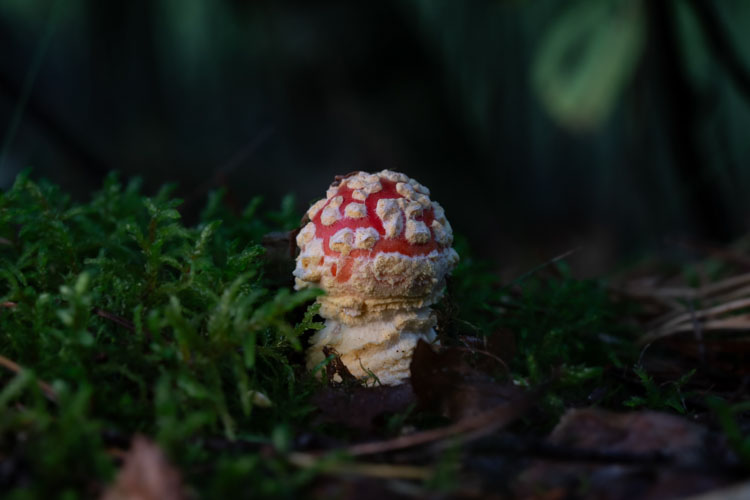
In the world of landscape photography, for example, there’s a lot of planning. Weather conditions, light, subject, positioning, all need to work out if you want to take a photo of a specific subject. But most of the time, you can take interesting photos in any condition of any subject, if you take the time and care to look for what is present, without an agenda.
Be open to seeing what is there. What can you create with what is already here? Can you evoke emotions? What kind? How?
When you go out intending to create a specific photo and are determined to do it, no matter what, you may miss many other opportunities that are right there, waiting for you.
Break rules intentionally, not accidentally
You’ve probably heard that there are rules in photography, but can they be broken for the right reason?
A common tip is to avoid clutter in your photo; otherwise, the observer’s eye will be confused, and they will not know where to look. Instead, you’re taught to simplify and to use a design element like leading lines to direct the viewer’s eye to your subject.
But what if I want to transmit chaos? What if I want the observer to feel confused? See what I am doing here? I’m being intentional with the emotion I want to transmit.
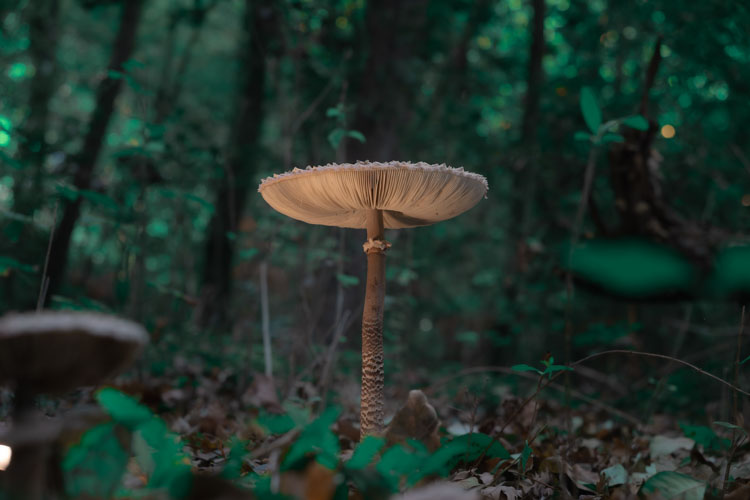
When you have a clear intention, then you can break any rule, knowing why you did it and what the effect will be. Intention = mindfulness.
But when you’re not used to paying attention to emotions and mood, or the elements in a photo that convey them, it will be difficult to tell a story, to elicit emotions in your observer, and to be intentional.
Are you curious? I hope so. I have tried to create wonder and curiosity using words. See what I did here? The same thing can be done with words, a brush, a guitar solo, or a camera!
Mindfulness in General
The obvious tip here is to learn about mindfulness in general and practice a meditation technique that is about observing the present moment. Shinzen Young is a great teacher who offers a lot of free stuff online.
Joseph Goldstein is another great teacher, but most of his content is not about a specific technique; rather, he covers what things you can observe (in a more general sense) in your human experience.
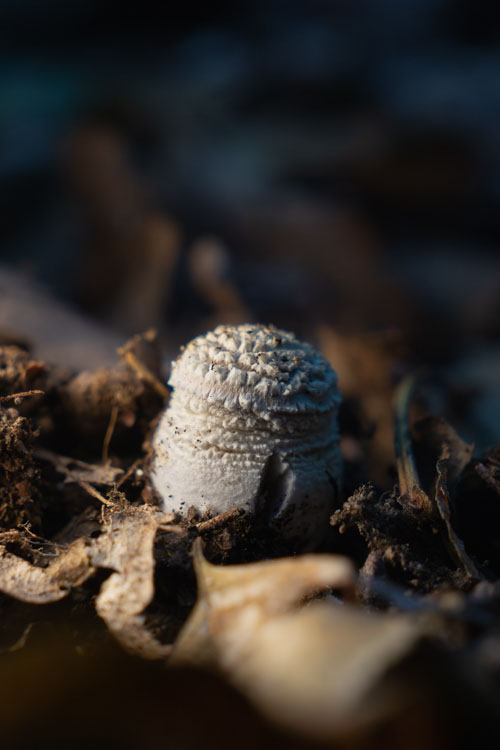
Anything from those two teachers is a great starting point, but try and forget you’re doing it for your photography. Pick it up as a practice, and expect nothing. The more you expect from it, the less you’ll get back in return, as odd as it might sound.
NOTE from Darlene: These are just suggestions from our guest writer. I urge you to do your own research and find a meditation practitioner with whom you connect and follow them.
Photography Focused
If you want to do something more photography-focused, then I suggest picking some images by other photographers, whose style of photography you admire and would like to learn from. Then, for each image, ask yourself the following questions:
- What emotions do I get from this photo?
- What elements of the photo generate those emotions?
- What technical capabilities am I missing to create that element in the image?
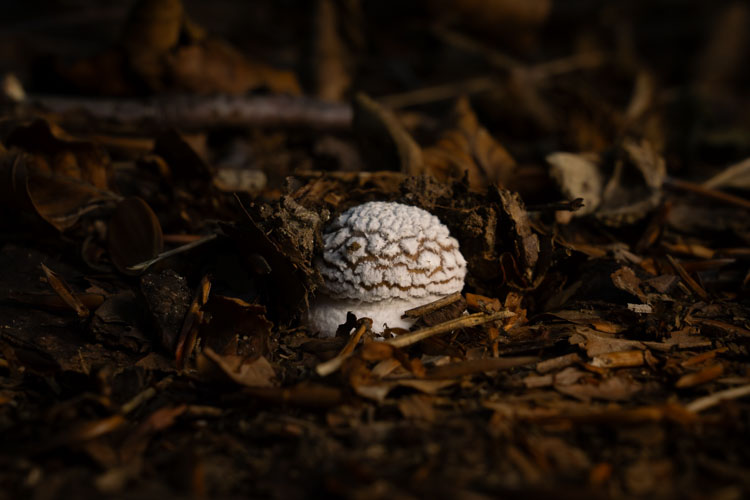
This alone will be a great exercise. It will help you develop as a storyteller and become more intentional with your photography.
Another exercise would be to go out with your camera (a setup that is easy to carry is ideal) and take photos of what you find interesting. Go without an agenda or plan for photographing a specific subject you know will be on your route (like a certain building or landmark).
If you want to learn how to photograph people, take your camera with you when you’re among friends who don’t mind being photographed, and take candid photos of them. Can you capture them when they’re interacting with each other and showing emotions?
What unplanned photography looks like
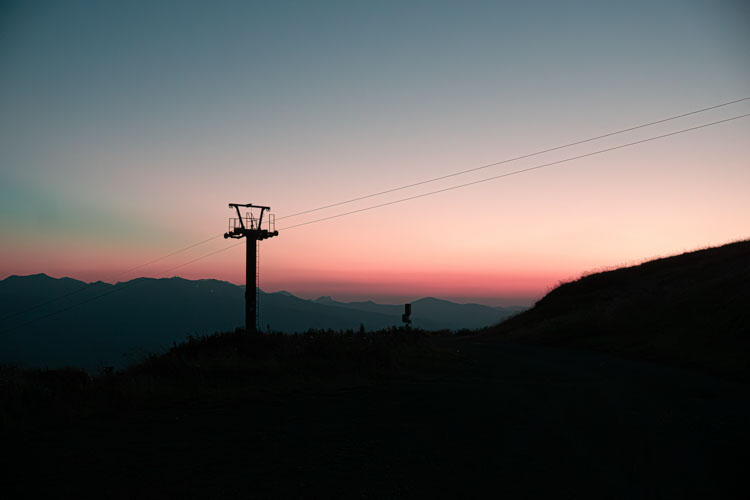
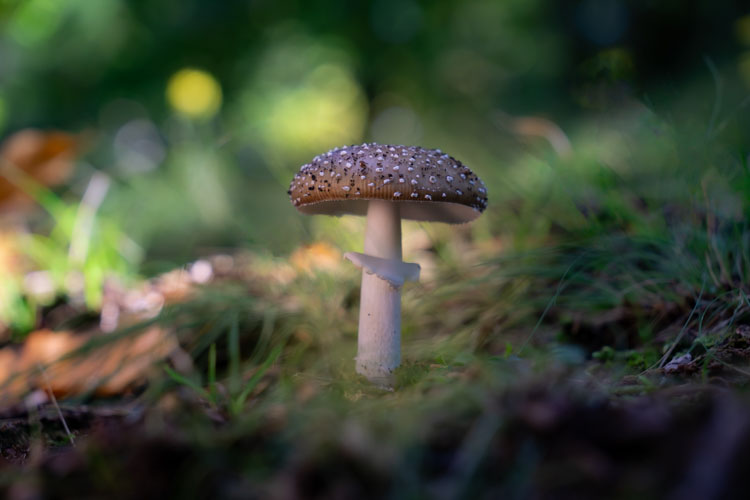
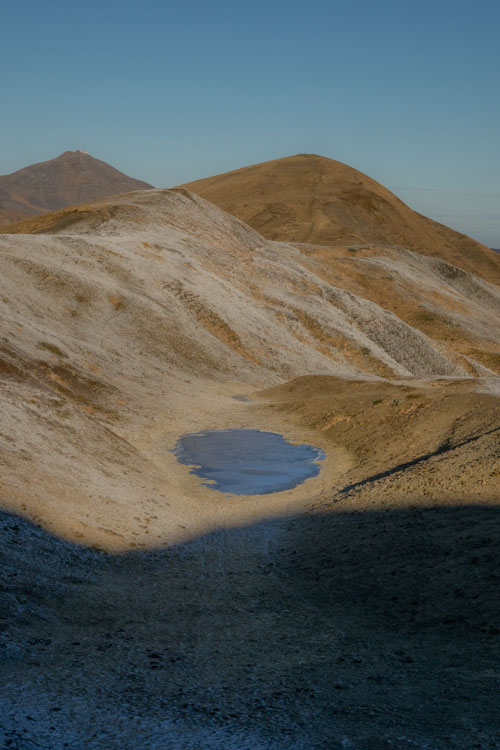
As part of the article, I wanted to showcase some images I created after 2023, when I had practiced mindfulness for some time.
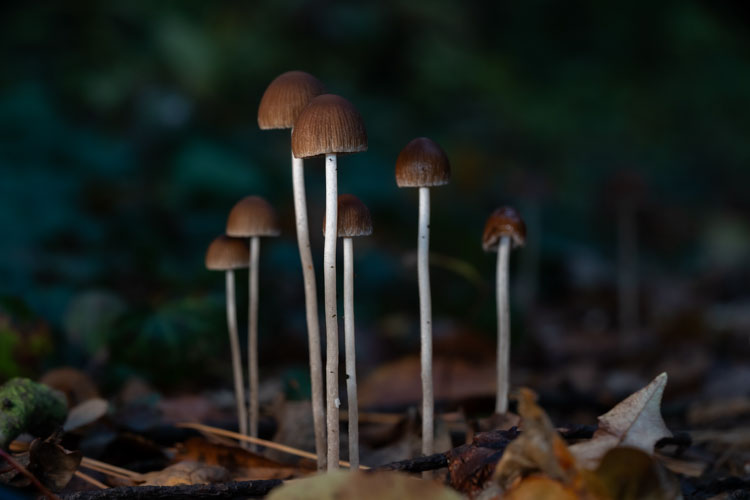
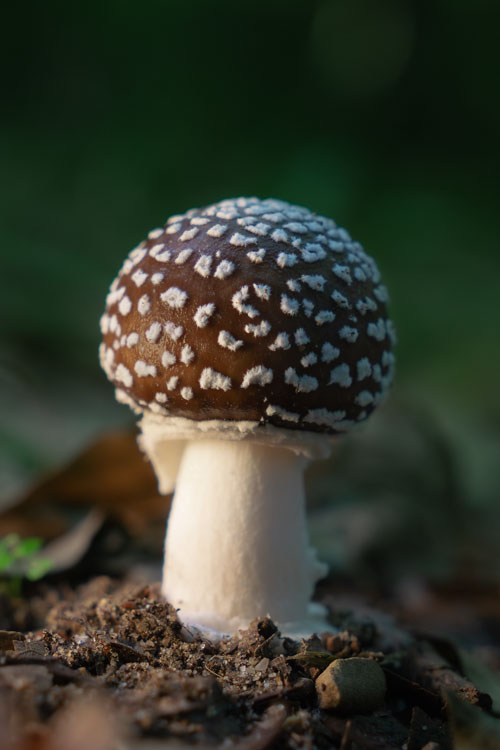
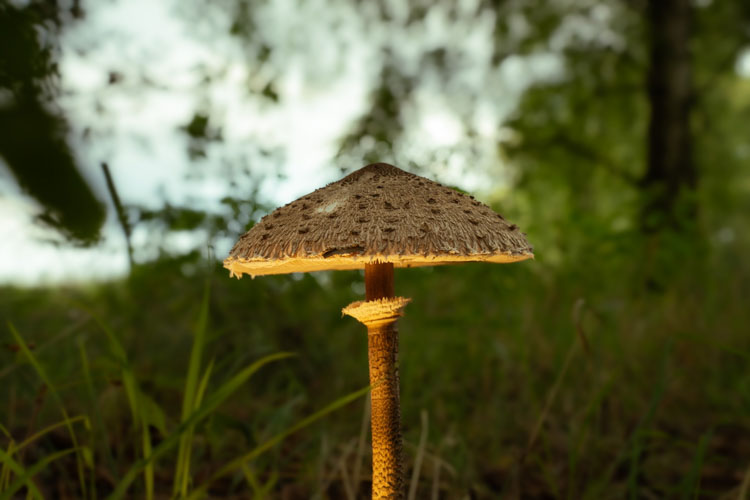
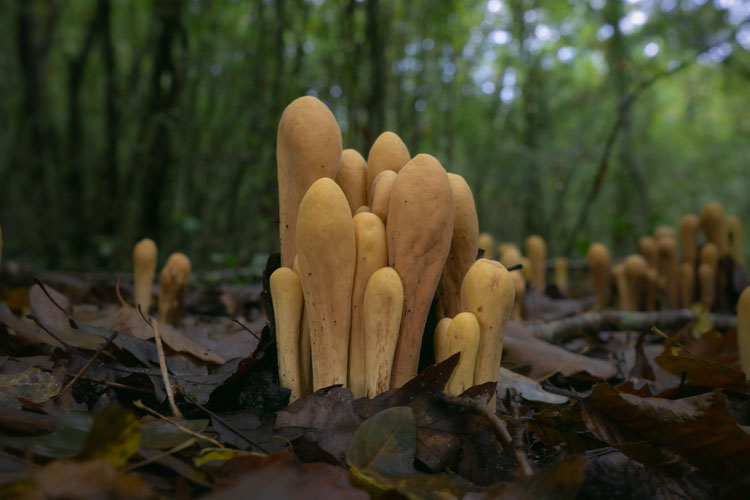
Specifically, what you see are mostly photos of mushrooms I take as a hobby. I think the subject showcases even better what I’ve talked about—there is little planning you can do when it comes to mushrooms, since they are very ephemeral forms of life. So the only thing you can do is go into the woods with some of the gear you think will come in handy, and then see what subjects you can find.
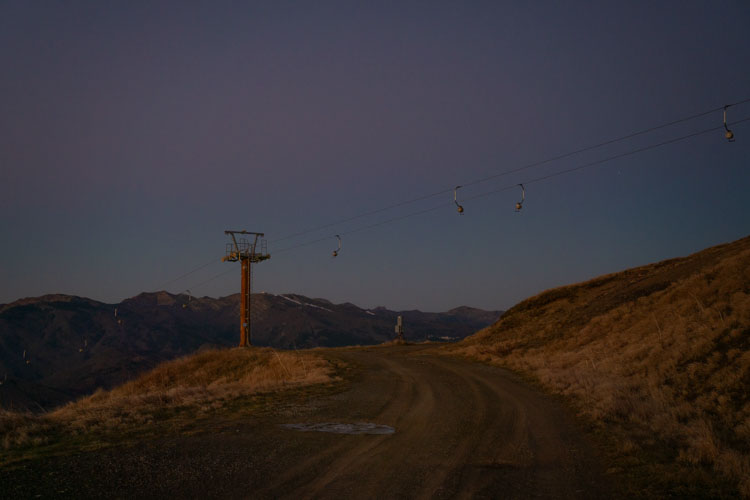
I’ve included a few landscapes too, but I’ve only selected the ones that I didn’t plan; I just happened upon them.
Summary and action plan
So, after reading this, will you try to incorporate mindfulness into your life? Can you see the potential it has for helping improve your photography?
Even if you decide that meditation isn’t for you, think about how else you can be more mindful and intentional when photographing.
